
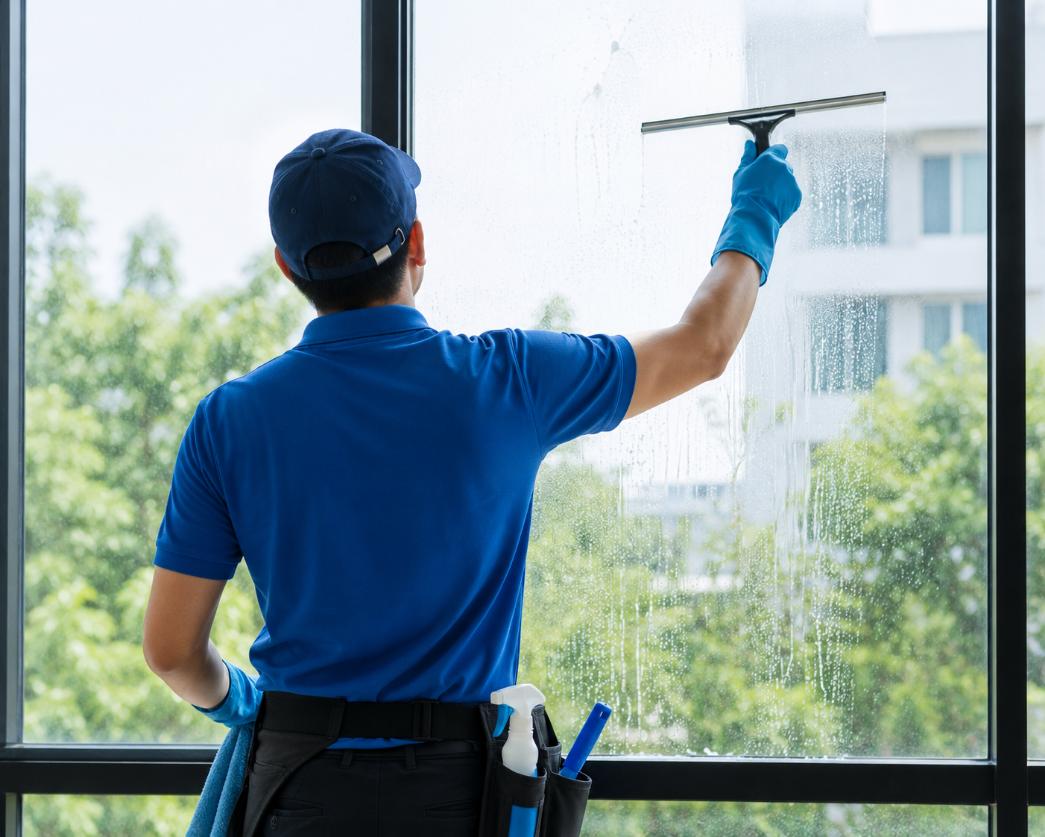
Complete Guide to Window & Glass Cleaning Services
Dust, hard water stains, fingerprints, and environmental pollutants can quickly dull even the best-looking glass. Clean windows and glass surfaces do more than just improve appearance—they transform how a space feels and functions.
Types of Window & Glass Surfaces
Different environments use different types of glass surfaces, each requiring specific cleaning approaches and care techniques.
Glass doors and partitions
These are commonly found in modern homes, offices, and commercial interiors. They include internal office dividers, sliding glass doors, and conference room partitions.
Key characteristics:
- Frequently touched, leading to fingerprints and smudges
- Require frequent cleaning for a professional appearance
- Often made of tempered or frosted glass
Shopfront and display glass
Retail stores rely heavily on clean glass for product visibility and customer attraction. This includes storefront windows, display cases, and promotional glass panels.
Key characteristics:
- Must remain spotless to enhance product presentation
- Quickly collects dust and street pollution
- Requires frequent cleaning schedules, especially in busy urban areas
Mirrors and interior glass surfaces
These include bathroom mirrors, decorative mirrors, gym mirrors, and interior glass fixtures.
Key characteristics:
- Highly sensitive to streaks and water spots
- Require gentle cleaning agents to avoid damage
- Often used for aesthetic and functional purposes
Skylights and hard-to-reach windows
Skylights are glass installations placed on roofs or high ceilings to allow natural light into a building. They are common in modern homes, malls, and office spaces.
Key characteristics:
- Difficult and risky to access without professional equipment
- Accumulate dust, leaves, and weather residue
- Require specialized cleaning tools and safety procedures
Common Window & Glass Cleaning Problems
Window and glass surfaces in urban environments like Nairobi face several challenges due to weather, construction activity, and pollution. These issues often require more than simple wiping to fully resolve.
Water stains and mineral deposits
Rainwater or tap water containing minerals such as calcium and magnesium can leave white, cloudy spots on glass. Over time, these stains become harder to remove and may require professional-grade cleaning solutions.
Dust and Nairobi urban pollution buildup
Urban environments experience constant exposure to dust, vehicle emissions, and construction debris. In Nairobi, this buildup is common on both residential and commercial windows, especially in areas near busy roads or ongoing developments.
Fingerprints and smudges
Frequent touching of glass doors, partitions, and shopfronts leads to visible fingerprints and smears. These marks are especially noticeable on clear or tinted glass and can make surfaces look dirty even shortly after cleaning.
Hard water marks
Hard water contains high mineral content that leaves stubborn streaks and spots when it dries on glass. These marks often require specialized cleaning agents to fully remove without damaging the surface.
Paint, cement, and post-construction residue
After construction or renovation, glass surfaces are often left with paint splashes, cement dust, adhesive residue, or plaster marks. These are some of the toughest cleaning challenges and usually require professional scraping tools and solvents to remove safely.
Bird droppings and organic stains
Bird droppings are highly acidic and can damage glass if left for long periods. They are also difficult to clean once dried. In addition, organic debris such as tree sap or insects can leave sticky residues that attract more dirt.
Types of Window Cleaning Services
Window cleaning services vary depending on the location, accessibility, and level of dirt or contamination. Understanding the different types helps clients choose the right service for their needs.
Interior window cleaning
This involves cleaning the inside surfaces of windows within homes, offices, and commercial buildings. It focuses on removing fingerprints, dust, smudges, and indoor air residue such as cooking fumes or smoke.
Key features:
- Safe and easy access (no special equipment required)
- Focus on clarity and streak-free finish
- Common in residential homes and office spaces
- Often combined with general interior cleaning services
Exterior window cleaning
Exterior cleaning targets the outside surfaces of windows, which are exposed to weather, dust, pollution, and bird droppings. This type requires more effort and sometimes specialized tools.
Key features:
- Removes rain marks, dust, and environmental grime
- May require ladders, poles, or rope access
- More frequent in urban and roadside buildings
- Essential for maintaining building appearance
High-rise / skyscraper window cleaning
This service is designed for tall buildings such as office towers, hotels, and malls. It involves advanced safety systems and trained technicians.
Key features:
- Uses rope access (abseiling), suspended platforms, or gondolas
- Requires strict safety protocols and certifications
- High-risk, specialized professional service
- Ensures clean glass even at extreme heights
Post-construction glass cleaning
This service is performed after building construction or renovation. It focuses on removing tough residues left behind during construction.
Key features:
- Removes paint splashes, cement dust, glue, and plaster
- Requires scraping tools and strong cleaning agents
- Often a one-time intensive cleaning service
- Prepares the building for occupancy or handover
One-time deep cleaning
A one-off comprehensive cleaning service for windows that are heavily soiled or have not been cleaned for a long time.
Key features:
- Intensive removal of dirt buildup and stains
- Suitable for seasonal cleaning or special events
- Covers both interior and exterior surfaces
- Restores glass to near-original clarity
Scheduled maintenance cleaning
This is a recurring service done weekly, monthly, or quarterly depending on client needs. It ensures windows remain consistently clean.
Key features:
- Prevents heavy dirt buildup over time
- Cost-effective for businesses and property managers
- Customizable cleaning schedules
- Ideal for offices, malls, and commercial buildings
Why clean windows matter for homes and businesses
Clean windows are more than just about appearance—they play an important functional and psychological role:
- Improved natural lighting: Clean glass allows more sunlight into rooms, making spaces brighter and more energy-efficient.
- Better aesthetics: Sparkling windows enhance the overall look of homes, offices, and commercial buildings.
- Professional image: For businesses, clean storefronts and office windows create a strong first impression for clients and customers.
- Health and hygiene: Regular cleaning helps reduce buildup of dust, mold, and allergens on glass surfaces.
- Longer window lifespan: Removing dirt, minerals, and pollutants prevents long-term damage and etching on glass.
Professional Window Cleaning Methods
Professional cleaners use different techniques depending on building height, glass type, and level of dirt. These methods ensure safety, efficiency, and a streak-free finish.
Traditional squeegee cleaning
This is the most common method used for ground-level and easily accessible windows.
How it works:
- Glass is washed with soapy water or cleaning solution
- A squeegee is used to remove water and prevent streaks
- Microfiber cloths polish edges and corners
Best for:
- Homes
- Small offices
- Shopfront windows
Water-fed pole systems (for high windows)
This method uses long telescopic poles that deliver purified water directly to the glass.
How it works:
- Brushes attached to poles scrub the glass
- Purified water removes dirt without leaving streaks
- No need for ladders in many cases
Best for:
- Multi-storey buildings
- Hard-to-reach exterior windows
- Safer alternative to ladders
Pure water technology cleaning
This advanced method uses deionized or purified water that contains no minerals.
How it works:
- Removes dirt without soap or chemicals
- Prevents water spots and streaks
- Leaves glass cleaner for longer periods
Best for:
- Commercial buildings
- Sensitive glass surfaces
- Eco-conscious cleaning services
Rope access / abseiling for high-rise buildings
A specialized technique used for skyscrapers and tall structures where other methods are not practical.
How it works:
- Technicians are suspended using ropes and harness systems
- Allows access to all parts of the building exterior
- Requires strict safety training and certification
Best for:
- High-rise buildings
- Complex architectural structures
- Areas inaccessible by lifts or scaffolding
Pressure-assisted cleaning for exterior glass
This method uses controlled water pressure to remove stubborn dirt from exterior surfaces.
How it works:
- Low to moderate pressure water jets clean glass
- Often combined with detergents or eco-solutions
- Helps remove heavy grime and pollution buildup
Best for:
- Heavily polluted urban areas
- Large exterior glass panels
- Industrial or commercial buildings
Eco-friendly cleaning solutions
This approach uses biodegradable and non-toxic cleaning agents that are safe for people and the environment.
How it works:
- Uses plant-based or low-chemical detergents
- Reduces environmental impact
- Safe for pets, plants, and indoor air quality
Best for:
- Homes with children or pets
- Green-certified buildings
- Health-conscious clients
Step-by-Step Window Cleaning Process
Professional window cleaning follows a structured process to ensure glass is thoroughly cleaned, streak-free, and safely maintained. Each step plays a role in achieving a high-quality finish.
Inspection of glass condition
The process begins with assessing the condition of the glass and surrounding frames. Cleaners check for cracks, deep stains, paint residue, or hard water marks to determine the appropriate cleaning method and tools.
Dusting and dry cleaning first
Before applying any liquid, loose dust, cobwebs, and debris are removed from the surface. This prevents mud-like streaks when water or cleaning solutions are applied later.
Application of cleaning solution
A specialized glass cleaning solution (often diluted with water) is applied evenly across the surface. This helps break down grease, grime, fingerprints, and stubborn dirt.
Scrubbing and stain removal
Using microfiber cloths, soft sponges, or scrub pads, technicians gently remove stains and buildup. Extra attention is given to areas with hard water spots, bird droppings, or adhesive residue.
Squeegee drying technique
A squeegee is used to remove water and cleaning solution from the glass in smooth, controlled strokes. This step is crucial for achieving a streak-free finish and preventing water marks.
Edge and frame cleaning
After the glass is cleaned, attention shifts to the edges, corners, and window frames. These areas often collect hidden dust and grime that can affect the overall appearance.
Final inspection and polishing
The final step involves checking the glass from different angles to ensure no streaks, spots, or smears are left behind. Any remaining marks are polished for a crystal-clear finish.
When DIY cleaning is enough
DIY window cleaning is suitable for small-scale, low-risk cleaning tasks.
Best situations for DIY:
- Ground-floor or easily reachable windows
- Light dust and minor smudges
- Regular quick cleaning in small homes
- Low-rise apartments with safe access
For these cases, basic household tools and mild detergents can achieve acceptable results.
Limitations of home cleaning tools
Most household cleaning tools are not designed for deep or professional-level cleaning.
Common limitations:
- Lack of streak-free finishing tools like professional squeegees
- Inability to remove hard water stains or mineral deposits
- Difficulty reaching high or exterior windows
- Limited effectiveness on paint, cement, or adhesive residues
As a result, DIY cleaning often produces uneven or short-lasting results.
Benefits of hiring professionals
Professional window cleaning services offer expertise, equipment, and safety that DIY methods cannot match.
Key advantages:
- Streak-free, polished results
- Safe cleaning of high-rise and hard-to-reach areas
- Removal of tough stains and long-term buildup
- Faster and more efficient cleaning process
- Use of specialized tools and eco-friendly solutions
Professionals also ensure consistent results across all glass surfaces.
Long-term cost comparison
While DIY cleaning may seem cheaper initially, it may not always be cost-effective in the long run.
DIY costs:
- Low upfront expense
- Frequent re-cleaning due to poor durability of results
- Potential costs from accidental damage or breakage
Professional services:
- Higher upfront cost per session
- Longer-lasting cleanliness
- Reduced risk of damage to glass
- Less time and effort required from property owners
Overall, professional cleaning often provides better value for larger properties or frequent maintenance needs.
How Often Should Windows Be Cleaned?
The frequency of window cleaning depends on the type of property, environmental conditions, and level of exposure to dirt and pollution. Regular cleaning helps maintain appearance, hygiene, and long-term glass durability.
Residential cleaning frequency
For homes and apartments, cleaning schedules are generally more flexible.
Typical recommendations:
- Every 2–3 months for standard homes
- Every 1–2 months for homes in dusty or urban areas
- Monthly cleaning for high-end properties or large glass surfaces
Factors affecting frequency:
- Dust exposure (e.g., near busy roads or construction sites)
- Presence of children or pets
- Weather conditions and seasonal changes
Commercial cleaning schedules
Commercial properties require more frequent cleaning due to higher visibility and customer traffic.
Typical schedules:
- Weekly or bi-weekly for offices and retail shops
- Daily or alternate-day cleaning for malls, hotels, and showrooms
- Monthly deep cleaning for less exposed commercial spaces
Clean windows help maintain a professional and welcoming business environment.
High-traffic area recommendations
Areas with heavy human movement or exposure to pollution need more frequent maintenance.
Examples include:
- Shopping malls
- Airports and transport hubs
- Restaurants and cafés
- Street-facing retail stores
Recommended frequency:
- Daily spot cleaning
- Weekly full glass cleaning
Seasonal cleaning considerations (rainy vs dry seasons)
Rainy season:
- More water stains, mud splashes, and streaks
- Requires more frequent cleaning to prevent buildup
- Risk of mineral deposits from rainwater drying on glass
Dry season:
- Increased dust accumulation, especially in urban areas like Nairobi
- Windows may require more frequent dust removal
- Wind carries fine particles that settle quickly on glass
Adjusting cleaning schedules based on seasons ensures consistent clarity year-round.
Safety Measures in Window Cleaning
Window cleaning, especially at height, requires strict safety standards to protect workers and the public. Professionals use certified equipment like ladders, scaffolds, and rope systems, along with proper anchoring and pre-job risk assessments. Personal protective equipment (PPE)—including helmets, harnesses, gloves, non-slip footwear, and goggles—is essential to prevent injuries from falls, debris, and chemicals.
Rope access cleaning follows specialized safety protocols such as double-rope systems, regular equipment inspections, certified technician training, and emergency preparedness. Weather conditions are also critical—work is paused during high winds, heavy rain, storms, or extreme heat to avoid accidents and ensure safe operations.
Cost of Window & Glass Cleaning Services
Window cleaning costs in Nairobi vary based on property size, height, dirt level, and accessibility. Residential services are generally more affordable, while commercial and high-rise buildings cost more due to equipment and labor requirements.
Estimated price ranges:
- Residential homes: KES 500 – 800 per window or KES 5,000 – 8,000 per house
- Apartments (external only): KES 2,500 – 12,000 depending on floors and number of windows
- Small offices: KES 8,000 – 15,000
- Large commercial buildings: KES 25,000 – 70,000+ (often per square meter or contract-based)
- High-rise buildings: KES 40,000 – 150,000+ depending on height and rope access requirements
Prices are influenced by factors such as building height, level of dirt, number of windows, type of glass, and frequency of cleaning. High-rise and hard-to-reach areas cost more due to safety equipment, trained technicians, and insurance requirements.
One-time deep cleaning is usually more expensive per visit, while scheduled contracts (monthly or quarterly) offer better value over time for offices, malls, and hotels. Clients should also watch out for hidden costs like transport fees, stain removal charges, or equipment surcharges by requesting a clear, itemized quote before work begins.
Common Mistakes in Window Cleaning
Common mistakes include using dirty or rough cloths, which can scratch glass and leave streaks, and cleaning under direct sunlight, which causes quick drying and water marks. Using the wrong chemicals may damage or cloud glass, while ignoring frames and tracks leads to dirt buildup and faster re-soiling. Cleaning high windows without proper safety measures is also risky and should be avoided.
Benefits of Hiring Professional Cleaners
Hiring professional window cleaners saves time, ensures streak-free results, and guarantees safety when handling high or hard-to-reach areas. It also helps maintain glass quality by preventing long-term damage like staining, scratches, and buildup, while extending the lifespan of your windows.
Professionals use advanced tools such as water-fed poles, pure water systems, and eco-friendly products to deliver deeper and more efficient cleaning than DIY methods. For reliable, affordable, and high-quality results in Nairobi, you can consider Nairobi Cleaning Services, a trusted provider known for professional window and general cleaning solutions with a focus on safety, consistency, and customer satisfaction.